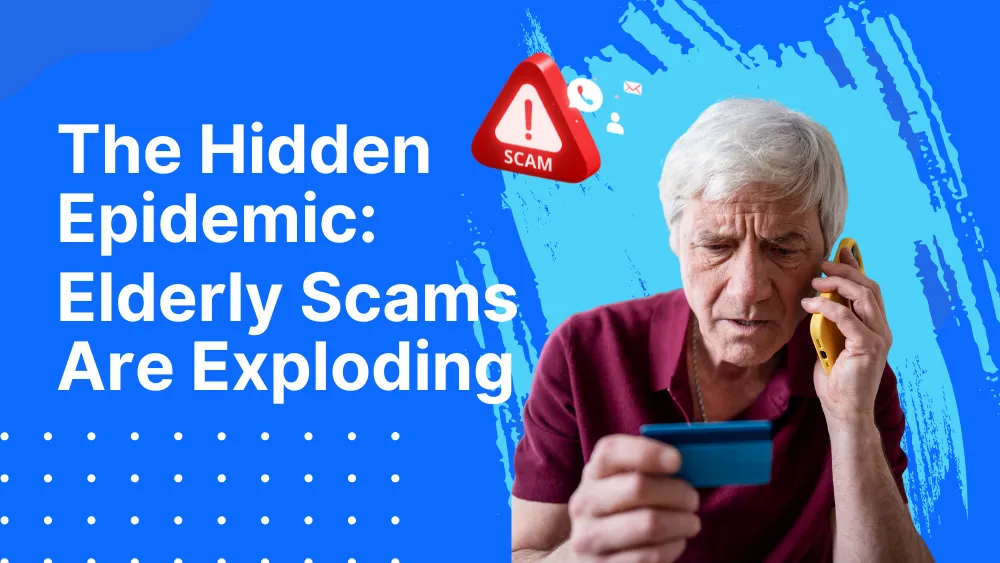
As digital life becomes more complex, older adults are being targeted like never before.
From “tech support” hoaxes to “grandparent in distress” calls, scammers are exploiting a perfect storm of fear, trust, and technology gaps and the impact is staggering.
In 2024 alone, Americans over 60 lost more than $3.4 billion to fraud, according to the FBI’s Internet Crime Complaint Center. That’s a 46% increase year-over-year, and for every case reported, experts estimate at least four go unreported.
For companies that serve this population, whether through internet, phone, banking, or security products, this is more than a consumer-protection issue.
It’s a customer-trust crisis.
How Elderly Scams Work
Elderly scams rely on emotional urgency and authority mimicry which are two tactics that override critical thinking.
Common variations include:
- Tech Support Scams: Fraudsters pose as Microsoft, Apple, or antivirus representatives, claiming a virus needs immediate attention. The victims are told to provide remote access or pay “support fees.”
- Grandparent Scams: A voice, which is often AI-generated, claims to be a grandchild in trouble, needing money urgently. These scams are increasingly convincing thanks to cloned voices from social media.
- Romance Scams: Criminals build emotional connections online, gradually requesting money or gifts under false pretenses.
- Government Impersonation Scams: Callers pretend to be from the IRS, Social Security, or Medicare, threatening penalties or suspension of benefits.
Each one is engineered to bypass skepticism through trust. The caller sounds legitimate, the situation feels urgent, and they rely on the victim reacting before verifying.
Why the Elderly Are Targeted
Scammers focus on seniors for many reasons:
- They are more likely to answer unknown calls or texts.
- They often have substantial savings and less familiarity with digital scams.
- They tend to trust authority, including police, government, or family figures, making impersonation highly effective.
- Many experience social isolation, which scammers exploit by offering attention and empathy.
It’s not just a generational issue; it’s a vulnerability gap that spans technology, psychology, and accessibility.
The Human Cost
Financially, losses can devastate fixed incomes.
Emotionally, victims often suffer shame, guilt, and fear, leading them to hide what happened, even from family.
For many, the experience permanently erodes trust in online interactions and institutions.
For partners, whether you’re a telecom provider, cybersecurity firm, or insurer, these scams translate directly into:
- Higher support and claims costs.
- Churn among older customers who lose faith in digital safety.
- Reputational damage when scams happen “through” your communication channel.
Why Partners Need to Act
Protecting older adults isn’t just the right thing to do, it’s a strategic differentiator. Today’s customers expect their service providers to play an active role in fraud prevention, not just in damage control.
Every fraudulent call, text, or email that slips through has downstream effects:
- Banks see account recovery requests.
- ISPs see customer blame.
- Security software sees user distrust.
Partners that take a proactive approach to scam detection position themselves as trusted guardians, not just vendors.
How Kidas Can Help
Kidas’ platform is built to identify emotionally manipulative messages before they lead to loss, using behavioral AI that recognizes patterns of urgency, authority, and fear.
For partners, that means:
- Early detection of high-risk SMS messages, emails or links sent.
- Privacy-first analysis that protects users without storing personal data.
- A chatbot that offers real-time education prompts that teach users to recognize red flags as they happen.
Together, we can help partners empower older users to feel confident online, while reducing fraud exposure, brand risk, and customer attrition.
Final Thoughts
Elderly scams are more than financial crimes: they’re emotional manipulations that weaponize trust. However, they also represent a major opportunity for companies to lead with empathy and innovation.
By embedding smarter, privacy-preserving scam detection across communication channels, partners can turn digital safety into a true value proposition, one that protects the most vulnerable users and strengthens trust across generations.